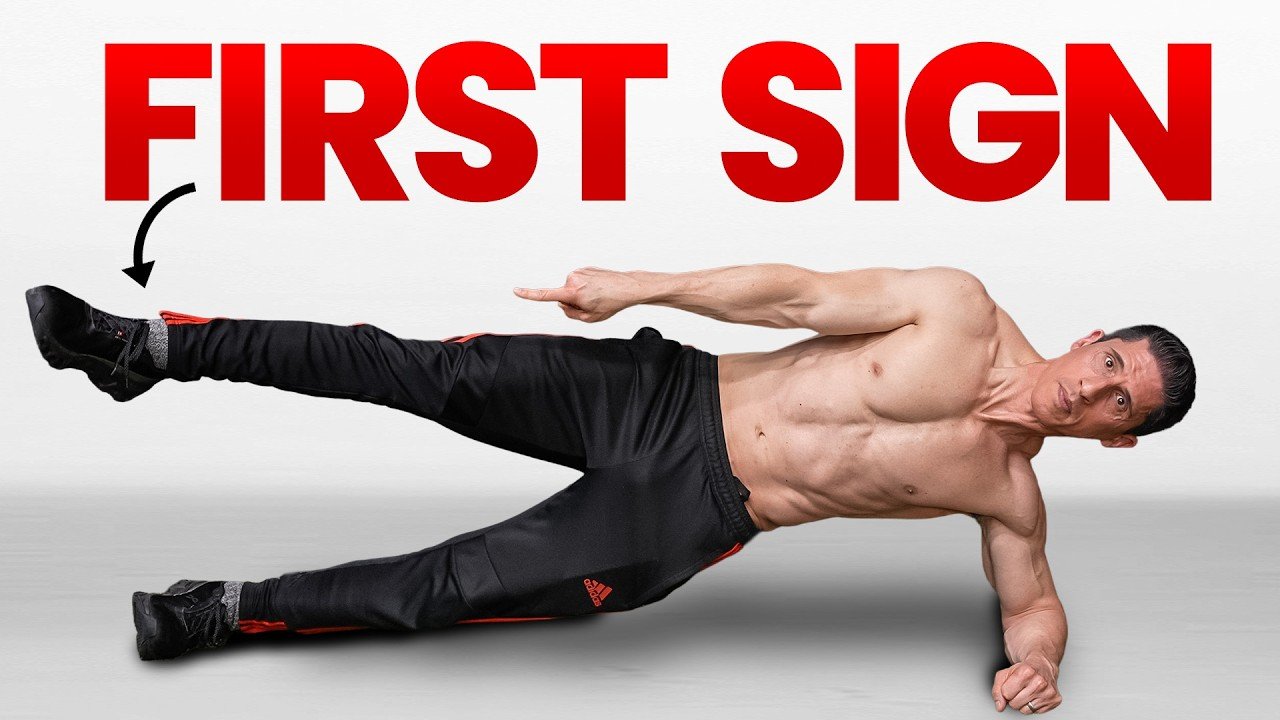

Did you know that there are 15 early predictors of very poor health as you age? In this video, I am going to cover the 15 signs that indicate very poor health as you get older and what you can do right now to improve the length and quality of your life. After all, quality of life as you age is just as important as the length of the life you are going to live and what I am going to show you in this video will make all the difference in the world.
Unlock Your Longevity Here – http://athleanx.com
Subscribe to This Channel Here – http://bit.ly/2b0coMW
One of the earliest predictors of poor health as you age is having mobility that only works without load. You may move well in bodyweight positions, but adding resistance exposes mobility loss, poor joint control, and compensations. If mobility isn’t trained under load, strength becomes unusable, joint stress increases, and injury risk rises with age.
The ability to hang from a bar is a powerful marker of grip strength, shoulder mobility, core strength, and upper-body joint health. Declining hang time often predicts strength loss and mobility decline with age. Being able to hang for 2+ minutes for men and 90+ seconds for women is a simple benchmark linked to better longevity and functional health.
Touching or overlapping your hands behind your back is a simple test of shoulder mobility, internal rotation, and external rotation. Shoulder mobility loss is common as we age and does not return unless it is trained. Losing this range affects daily function, posture, and long-term joint health, not just performance in the gym.
VO₂ max is one of the strongest predictors of cardiovascular health, longevity, and overall health as you age. Low VO₂ max is closely linked to higher disease risk, faster physical decline, and reduced quality of life. Improving aerobic capacity through conditioning and interval training helps preserve heart health, endurance, and long-term functional fitness as we get older.
Chronic dehydration is a common and often overlooked predictor of poor health as you age. Adequate water intake supports cognitive function, energy levels, joint health, and physical performance, not just gym training. Long-term dehydration contributes to fatigue, brain fog, and declining health, making daily hydration a key factor for longevity and overall well-being
Creatine is one of the most well-researched supplements for muscle strength, athletic performance, and preserving lean mass as you age. Emerging research also suggests creatine may support cognitive function and brain health, particularly in older adults. Failing to maintain muscle and cognitive capacity is a major predictor of poor health with age, making creatine a powerful tool for both physical and mental longevity.
Ignoring physical weaknesses is an early predictor of poor health and performance as you age. Consistently addressing mobility limitations, strength imbalances, and conditioning gaps helps prevent plateaus, injuries, and long-term dysfunction. Training movements and techniques that feel uncomfortable builds physical resilience, mental toughness, and supports sustainable progress over time.
Training to failure is one of the most objective ways to measure workout intensity and true effort in the gym. Many people believe they are training close to failure, but in reality stop several reps early, reducing the stimulus needed to maintain muscle as they age. Failing to train with sufficient intensity accelerates strength loss and muscle decline over time.
Corrective exercises help strengthen weak and stabilizing muscles that support proper form, biomechanics, and joint health. Ignoring these areas increases compensation patterns, limits strength gains, and raises injury risk as you age. Consistently addressing muscular imbalances is key for pain-free movement and long-term training longevity.
Relying exclusively on machines while avoiding free weights is an early predictor of declining functional strength and stability. Free weights require you to control load in space, engage stabilizing muscles, and develop coordination that machines often remove. Learning to move free weights confidently helps overcome exercise fear, preserves balance and strength, and supports real-world movement as you age.
For the rest of the early predictors of very poor health as you age, watch the video until the very end.
If you are looking for a complete workout routine and meal plan, be sure to head to athleanx.com and check out the program selector tool. It will take you just minutes to find the exact plan that fits your current goals and will help you to build ripped athletic muscle quickly.
For more muscle building and injury prevention and rehab, be sure to subscribe to our channel here on youtube via the link above and remember to turn on your notifications so you never miss a new video when it’s published.
